Cookies are essential for the smooth and secure operation of our website. They help us to monitor performance and provide you with an optimized, personalized user experience.
The cookie settings can be adjusted at any time in the footer of the page.
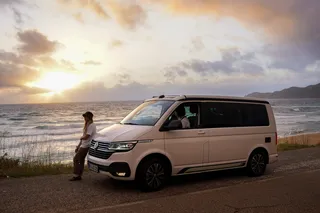
Fancy Rügen but no idea what to expect when camping there? In this post, you’ll get an overview of what awaits you and what to keep in mind. Whether it’s beaches, hiking, or water sports – you’ll find everything you need to know here! 🚐
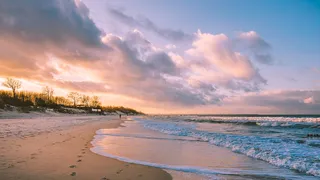
Rügen struggles with a few stereotypes – too many retirees and too many families. But the island has so much more to offer. It’s Germany’s largest island and a true paradise for camping and water sports. Whether you’re into long beach days or prefer exploring nature, Rügen has something for everyone. The famous chalk cliffs in Jasmund National Park are a real highlight, just like the charming coastal towns and great cycling and hiking trails. Camping on Rügen is a perfect way to experience the island up close and at a relaxed pace. Whether beachfront campsites or nature-focused spots – you’re sure to find your favorite place here!
Facts about Rügen
Rügen is Germany’s largest island, covering an area of 930 square kilometers.
It belongs to the federal state of Mecklenburg-Western Pomerania.
Rügen enjoys more hours of sunshine per year than the Côte d’Azur.
Chalk from Rügen is used in beauty treatments such as massages and masks.
There are more than 60 smaller islands surrounding Rügen.
Rügen is home to a large population of white-tailed eagles.
Getting to the island of Rügen
If you’re heading to Rügen by car, you have a few options. From Berlin, it takes around 3 to 3.5 hours – simply via the A19 or A11 onto the A20. From Hamburg, it’s about 2.5 to 3 hours via the A1 and A20 to Stralsund. The Rügen Bridge is always open and gets you onto the island quickly. You can also take the Rügen Causeway, which allows cars, bicycles, and trains, but it sometimes opens for ships. Make sure to check the opening times of the Ziegelgraben Bridge in advance so you don’t have to wait. If you prefer a more relaxed journey, there’s also a ferry. It takes a bit longer, but the views are definitely worth it!
Rügen offers a wide range of campsites, each with its own charm. Whether you want to wake up right by the sea, stay surrounded by nature, or prefer a family-friendly site with more comfort – the choice is huge. To help you find the perfect spot, I’ll introduce a few campsites here that might be just right for you, depending on your preferences.
🚐 Banzelvitz Campsite
over 200 pitches, tent meadow, sleeping barrels, holiday homes
dog-friendly, even with its own dog playground
family-friendly, playground and petting zoo, forest adventure trail
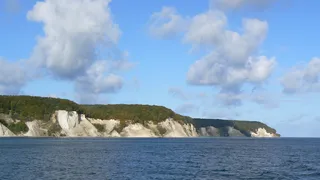
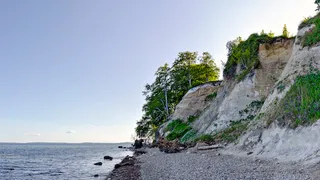
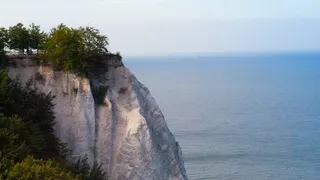
The chalk cliffs are among Rügen’s most famous natural wonders. They consist of bright white chalk cliffs that have been shaped by erosion over thousands of years and rise up to 118 meters above the Baltic Sea. The most well-known of them is the Königsstuhl – a striking rock formation in Jasmund that is also considered a landmark of the island. However, the chalk cliffs are gradually shrinking year by year. Wind, rain, and the constant force of the waves relentlessly wear away the steep cliffs, leading to natural erosion. As a result, the coastline is constantly changing and the chalk cliffs are continuously losing substance. Especially impressive is the so-called blue hour. Shortly before sunrise or after sunset, the unique light bathes the cliffs in soft shades of blue and purple. Perfect for photographers looking for spectacular shots. The colors of the sky combined with the glowing white chalk make this scenery a true highlight – and a moment you’ll definitely want to capture.
Cape Arkona
There’s plenty to experience at Cape Arkona! You can climb the two lighthouses and enjoy panoramic views over the coastline from the top – a perfect spot for anyone who loves wide-open views. Or take a relaxed walk along the cliffs and soak in the spectacular scenery. If you’re up for a bit more action, the many hiking trails around the cape are ideal and can even take you all the way to the fishing village of Vitt. Along the way, you’ll pass several viewpoints that are perfect for a picnic or snapping a few great photos. And if you enjoy walking by the sea, make sure to head down to the coast to stand right on the beach below the cliffs. Cape Arkona is also a popular spot for sunrise – so set your alarm and experience the show over the sea. An absolute must, especially in summer!
Jasmund National Park
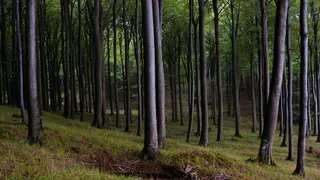
Jasmund National Park is known for its ancient beech forests, which you can explore along numerous hiking trails. The dense tree canopies and winding paths create an ideal setting for longer hikes or relaxed walks. A classic route is the high coastal trail, which runs directly along the shoreline and offers beautiful views of both the forest and the sea. But even away from the main paths, there are plenty of hidden spots waiting to be discovered.
If you’d like to learn more about nature, you can join a guided hike. Along the way, you’ll gain insight into the rare plant and animal species found in the park, as well as the unique features of this centuries-old forest. Whether you prefer to enjoy the peace on your own or want to learn more about the local flora and fauna, this area offers many ways to experience nature in your own way.
Sellin Pier
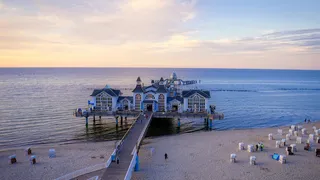
Sellin Pier is a real eye-catcher and one of Rügen’s most famous landmarks. Stretching over 400 meters, the elegant wooden pier extends far into the Baltic Sea and offers great views of the coastline. At the end of the pier, you can take your time to enjoy the fresh sea air and watch the waves.
You can rent a pedal boat, take a boat tour, or simply relax on the beach. The pier is also a popular meeting point for events such as concerts or markets from time to time. At the restaurant on the pier, you can sample regional specialties while enjoying views of the sunset. Sellin Pier is therefore not only a fantastic photo spot, but also the perfect place to end the day in a relaxed atmosphere.
Vilm Island
Vilm Island is a small islet located off the coast of Rügen. It is part of the Southeast Rügen Biosphere Reserve and is known for its untouched nature as well as its rich variety of plant and animal life. Visiting Vilm Island is strictly regulated: no more than 60 people are allowed to visit the island per day in order to protect its flora and fauna. For this reason, Vilm can only be accessed as part of a guided excursion, and advance registration is required. You can find more information about the island and the guided tours at the German Federal Agency for Nature Conservation.
Tips for activities on Rügen
Cycling
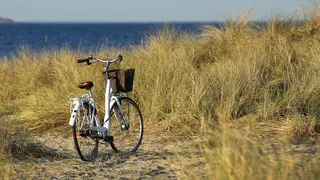
Cycling is the best way to explore the island on your own. There are plenty of well-signposted bike paths that wind through nature and take you to some of the most beautiful spots. Here are a few recommended routes for your trip:
Selliner See circular route: This relaxed route is around 21 km long and leads along Lake Sellin all the way to a distillery in Mönchgut. It’s perfect for anyone who wants to enjoy a leisurely bike ride without getting too out of breath.
Jasmunder Bodden: On this roughly 40 km long route, you’ll explore the Jasmund Lagoon. Along the way, you’ll also pass Prora. Prora is a former seaside resort on Rügen’s east coast that was built by the National Socialists in the 1930s. The complex stretches over 4.5 kilometers and was originally intended as a holiday resort for workers. Today, Prora stands as a historical site, and you can learn more about its architecture and history in various museums and information centers.
Rügen Circular Route: For the truly ambitious among you, there’s also the option to cycle all the way around the island of Rügen. This route is about 270 km long and can be completed in several stages. Along the way, you can tick off all the island’s highlights at your own pace.
Hiking
You can go hiking on Rügen as well. Even though the island doesn’t exactly impress with elevation gain, it more than makes up for it with stunning views of the Baltic Sea. Here are a few hiking recommendations on Rügen:
Cape Arkona: This route is just over 7 km long – more of an extended two-hour walk. It passes the fishing village of Vitt, offers views of Cape Arkona, and leads to the northernmost point of the island, Gellort, before continuing on to the square Schinkel Tower and the Marine Peil Tower (both lighthouses).
Victoria Viewpoint: This circular route runs along the coast and through Jasmund National Park. Along the way, you actually tackle around 240 meters of elevation gain. You start the tour at the Victoria viewing platform, where you’ll have wide views of the white chalk cliffs. From there, the route continues through the beech forests to the Wissower Ufer and then back to Königsstuhl via the high coastal trail.
View of Vilm Island: If you’re looking for a longer hike and want to tick off a few highlights along the way, this route is perfect. You’ll be on the trail for around 25 km, passing the Granitz Hunting Lodge and enjoying wonderful views of Vilm Island.
Water sports (kitesurfing, windsurfing, sailing, surfing, SUP)
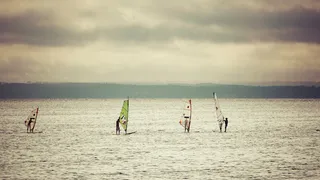
Rügen is a hotspot for water sports enthusiasts. Here, you can go kitesurfing, windsurfing, sailing, or simply glide over the waves on a stand-up paddleboard (SUP). The Baltic Sea offers ideal conditions for both beginners and advanced riders, with various spots suited to every skill level. Popular locations include Sellin Beach and the bays of Mönchgut. In the campsite recommendations above, you’ll also find several rental stations and surf schools where you can book a course directly.
Best time to visit Rügen for camping
Spring
Advantages:
Mild weather: In spring, you’ll enjoy pleasant temperatures that are perfect for outdoor activities.
Nature awakens: The landscape comes into bloom, offering great opportunities for photo tours and exploration.
Fewer tourists: It’s quieter, allowing you to explore the island in a relaxed way.
Disadvantages:
Changeable weather: The weather can change quickly, so make sure to pack weatherproof clothing.
Limited offerings: Some activities and attractions may not be open yet, as the season is just starting.
Summer
Advantages:
Peak season: In summer, you can expect warm temperatures between 20 and 25 °C, ideal for beach days.
Plenty to do: Whether swimming, kitesurfing, or cycling – there are lots of activities and cool events.
Lively atmosphere: The beaches are busy and there’s always something going on – perfect for meeting new people.
Disadvantages:
Crowded beaches: Popular beaches can fill up quickly, making it harder to relax. Make sure to reserve your spot early.
Higher prices: During peak season, prices for accommodation and activities increase, which can make your trip more expensive.
Autumn
Advantages:
Beautiful colors: In autumn, the landscape glows in vibrant colors – perfect for hiking and photography.
September stays warm: September is often still warm enough for beach days.
Quieter atmosphere: Compared to summer, it’s more relaxed, giving you more peace while exploring.
Disadvantages:
Cooler weather: From October onwards, temperatures drop and the chance of rain increases, so be prepared.
Fewer leisure options: Some attractions may already be closed or operate with shorter opening hours.
Practical tips for your camping trip
If you’re heading to Rügen for a camping trip, there are a few things you should keep in mind. Weather by the sea can be quite changeable, so be sure to pack weatherproof clothing – that way you’ll be prepared for anything. Wild camping is prohibited on Rügen and throughout Mecklenburg–Western Pomerania. To make sure you get the perfect campsite, it’s a good idea to book in advance. Also remember that many campsites have seasonal opening times, so check beforehand to avoid closed gates.
When exploring nature, always stay on official paths to protect the local flora and fauna. Rügen’s landscape is truly impressive, and it’s up to all of us to help preserve it. And if there’s no trash bin nearby, simply take your rubbish with you – this helps keep the island clean.
Conclusion
The wide range of activities and sights Rügen has to offer makes one thing clear: you definitely won’t get bored on a camping holiday here. You’re spoiled for choice when it comes to campsites, many of which are located right by the water, making you feel fully immersed in nature. Whether hiking, cycling, or water sports – the options for outdoor activities are almost endless. Even if Rügen might not sound that exciting at first glance, we can assure you: it has a lot to offer! So how about a camping trip to Rügen on your next free weekend? Pack your bags and let’s go! 🚐🌊